


Written by a Chihuahua Owner Who Learned the Hard Way
When I brought my first Chihuahua home, I thought feeding her would be simple. She weighed just four pounds. How complicated could it be? I grabbed a bag labeled “small breed” dog food, filled her bowl, and assumed my job was done.
Within three weeks, everything fell apart. She became a picky eater who turned her nose up at meals. She vomited occasionally. Her stools were loose. Her energy dropped. That experience taught me what every Chihuahua owner eventually learns: these tiny dogs have extremely specific nutritional needs.
Chihuahuas may weigh only three to seven pounds, but what you feed them affects their energy levels, digestion, dental health, skin quality, mood, and lifespan. This guide shares everything I learned through research, veterinary consultations, and real world trial and error. You’ll discover what actually works, what to avoid, and how to choose the right food for your Chihuahua at every stage of life.
Why Chihuahuas Need Special Food
Chihuahuas are not simply miniature versions of larger dogs. Their unique physiology creates specific nutritional requirements.
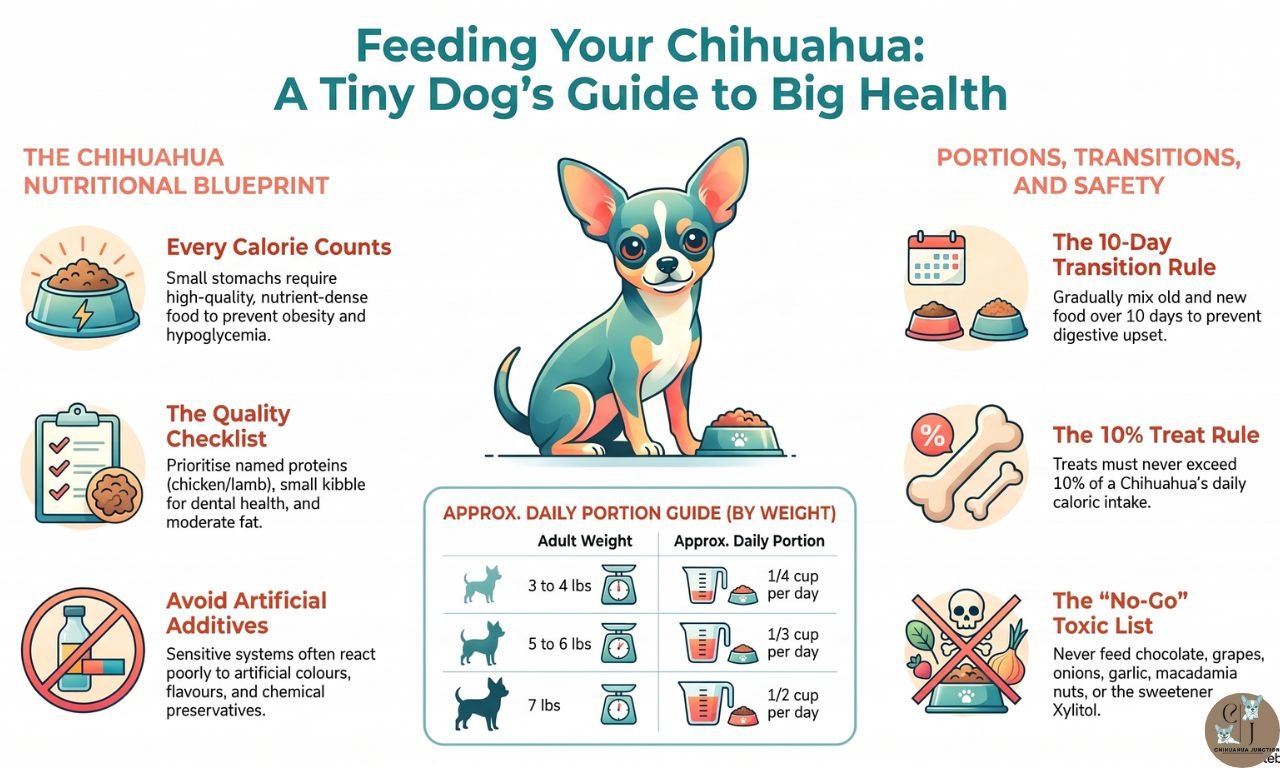
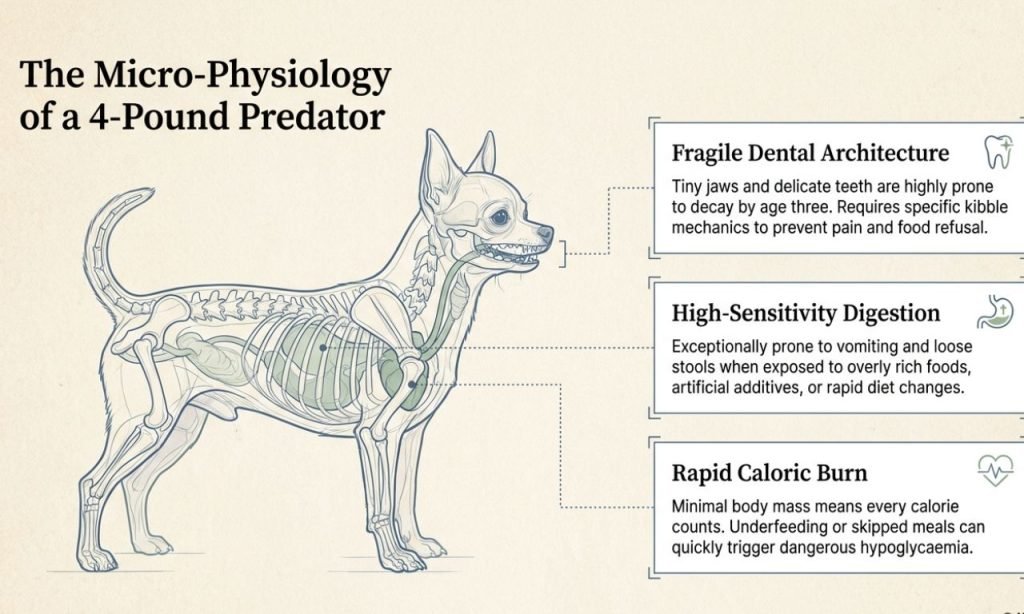
Because they are so small, every calorie counts. Overfeeding leads to rapid weight gain. Underfeeding can trigger hypoglycemia, a dangerous condition where blood sugar drops too low. Their stomachs are sensitive and easily upset. Their teeth are fragile and prone to decay.
When I fed my Chihuahua low quality or overly rich food, I noticed immediate problems. She vomited shortly after meals. Her stools became soft or loose. She scratched constantly. Her coat looked dull. She suddenly refused food she had previously eaten. Once I switched to food designed specifically for small breeds with gentle digestion, these issues resolved completely.
What I Look for in Quality Chihuahua Dog Food
After years of reading labels and observing how my dog responded to different foods, I developed clear criteria that I never compromise on.
Small, Easy to Chew Kibble
Chihuahuas have tiny mouths and delicate teeth. Large kibble pieces or rock hard pellets caused my dog to avoid eating or chew incorrectly, which led to dental problems over time.
Real Protein as the First Ingredient
I look for clearly named proteins: chicken, turkey, lamb, or fish. I avoid vague ingredients like “meat by-product” or “animal meal.” Quality protein supports muscle maintenance and provides sustained energy.
Moderate Fat Content
Foods with excessively high fat content caused vomiting in my Chihuahua. Moderate fat levels maintain energy without upsetting digestion.
Digestive Support Ingredients
Probiotics, prebiotics, fiber sources like pumpkin, and easily digestible grains such as rice make a noticeable difference in stool quality and overall digestive comfort.
No Artificial Additives
Artificial colors, flavors, and chemical preservatives triggered stomach reactions in my dog. Natural preservation methods work better for sensitive systems.
How Much Should a Chihuahua Eat Per Day
Getting portion sizes right matters more than brand selection. One of my biggest early mistakes was following feeding guidelines without adjusting for my individual dog.
Daily Feeding Guidelines for Adult Chihuahuas
These measurements provide a starting point. Adjust based on your dog’s activity level, metabolism, and body condition.
3 to 4 pounds: approximately ¼ cup per day
5 to 6 pounds: approximately ⅓ cup per day
7 pounds: approximately ½ cup per day
I divide daily portions into two or three separate meals. Smaller, more frequent feedings dramatically reduced vomiting and prevented blood sugar drops.
Puppy Feeding Requirements
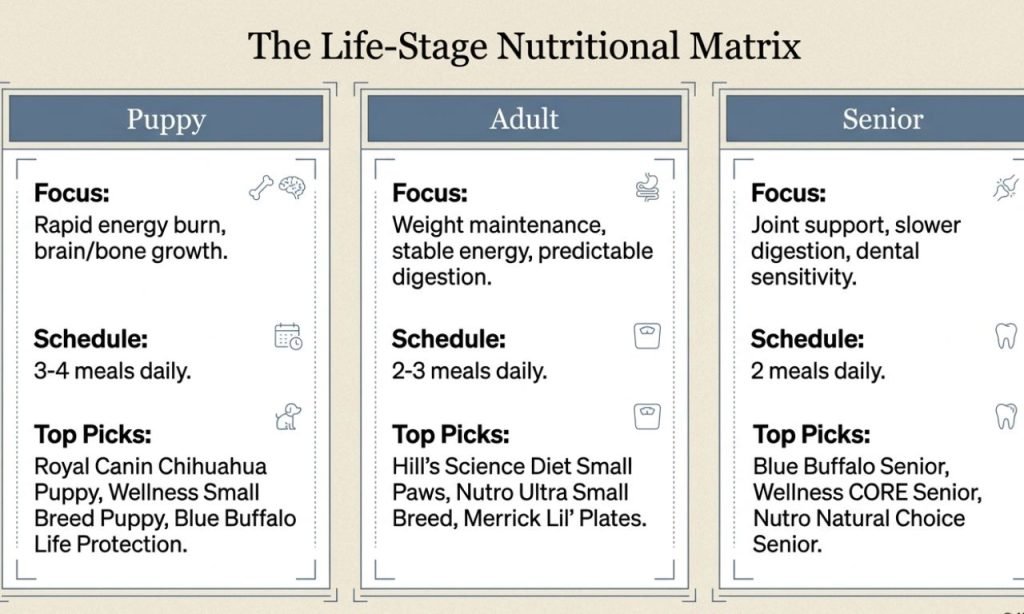
Chihuahua puppies need three to four small meals daily. Skipping meals can cause hypoglycemia. I learned how quickly a puppy can become weak and shaky when blood sugar drops too low.
Adjusting for Activity Level and Metabolism
Active Chihuahuas need slightly more food. Less active or senior dogs need less. Spayed or neutered dogs often require fewer calories than intact dogs. Monitor your dog’s body condition weekly and adjust portions accordingly.
Understanding Dog Food Labels
Learning to read labels transformed how I chose food for my Chihuahua.
AAFCO Certification Explained
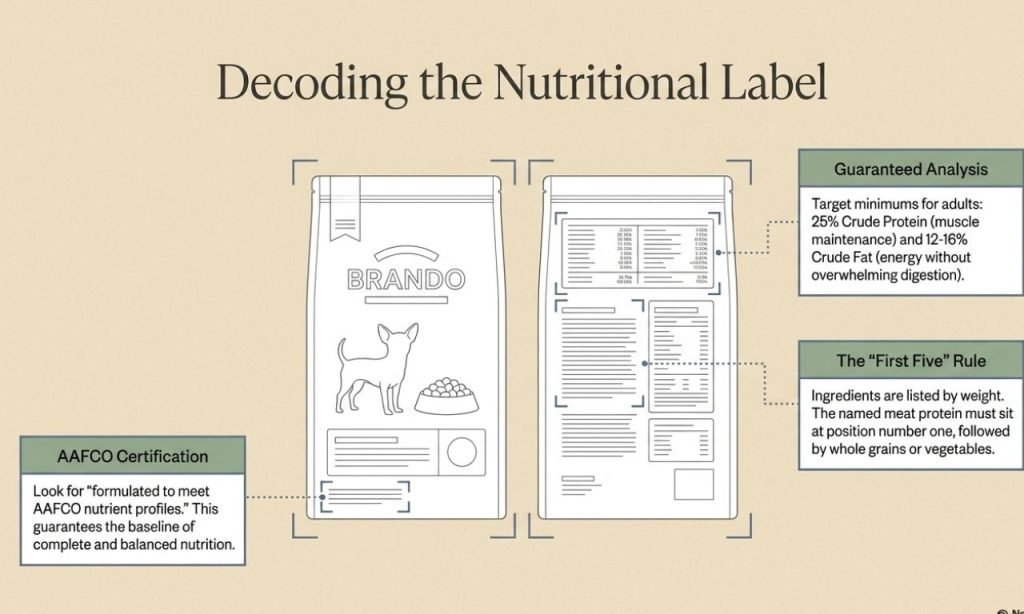
The Association of American Feed Control Officials (AAFCO) sets nutritional standards for pet food. Look for statements like “formulated to meet AAFCO nutrient profiles” or “feeding tests using AAFCO procedures.” This certification ensures the food provides complete and balanced nutrition.
Guaranteed Analysis Breakdown
The guaranteed analysis shows minimum percentages of crude protein and crude fat, and maximum percentages of crude fiber and moisture. For adult Chihuahuas, I look for at least 25% protein and 12 to 16% fat. These ranges support muscle maintenance without overwhelming digestion.
Ingredient List Priorities
Ingredients appear in descending order by weight. The first five ingredients matter most. I prioritize foods where named meat proteins appear first, followed by whole grains or vegetables, not fillers or by-products.
Best Food for Chihuahua Puppies
Puppies burn energy rapidly and need nutrients that support brain development, bone growth, and immune function.
Top Puppy Food Recommendations
Royal Canin Chihuahua Puppy delivered perfect kibble size for tiny mouths, gentle digestion, and consistent meal completion. My puppy finished every meal without stomach upset.
Wellness Small Breed Puppy produced excellent coat quality and maintained stable energy levels throughout the day. The ingredient quality impressed me.
Blue Buffalo Life Protection Puppy Small Breed provided good nutritional balance for growth without corn, wheat, or soy, which some puppies struggle to digest.
Best Food for Adult Chihuahuas
Adult Chihuahuas need balanced nutrition that maintains ideal weight, supports energy, and prevents digestive issues.
Top Adult Food Recommendations
Hill’s Science Diet Adult Small Paws earned my trust through consistent performance. Veterinarians recommend it widely. My dog experienced predictable digestion with zero surprises.
Nutro Ultra Small Breed Adult impressed me with taste acceptance and visible improvements in energy and coat quality.
Merrick Lil’ Plates worked exceptionally well for my picky eater. The protein-rich formula maintained energy without causing stomach upset.
Best Food for Senior Chihuahuas
As my Chihuahua aged, dental issues and slower digestion became real concerns. Senior formulas address these changes.
Top Senior Food Recommendations
Blue Buffalo Life Protection Senior Small Breed provided joint support through glucosamine and chondroitin while maintaining easy digestion.
Wellness CORE Senior Small Breed maintained muscle mass in my aging dog without causing bloating or digestive discomfort.
Nutro Natural Choice Senior delivered gentle, affordable nutrition that remained easy to chew even for dogs with dental sensitivity.
Best Food for Chihuahuas With Sensitive Stomachs
Sensitive stomachs appear extremely common in Chihuahuas. This section deserves special attention because so many owners face these challenges.
Signs Your Chihuahua Has a Sensitive Stomach
Watch for vomiting shortly after meals, loose stools or diarrhea, excessive gas and bloating, or sudden food refusal after previous bad reactions.
Best Food for Sensitive Stomach and Diarrhea
What finally resolved my dog’s issues: limited ingredient diets featuring single protein sources, lower fat content, and rice or oatmeal instead of corn.
Hill’s Science Diet Sensitive Stomach and Skin consistently delivered reliable results. Purina Pro Plan Sensitive Skin and Stomach Small Breed worked well for dogs with both digestive and skin issues. Wellness Simple Limited Ingredient Diet eliminated unnecessary ingredients that commonly trigger reactions.
Best Food for Vomiting Issues
Vomiting often resulted from food that was too rich, sudden dietary switches, or overfeeding. Solutions included smaller meal portions, eliminating toppers during flare-ups, and choosing simple formulas without excessive fat or hard-to-digest ingredients.
Veterinary Prescription Diets
When problems persisted, my veterinarian recommended prescription options. Hill’s Prescription Diet i/d, Royal Canin Gastrointestinal, and Purina Pro Plan Veterinary EN cost more than regular food but they work effectively, especially during recovery periods.
Best Food for Skin Allergies and Digestive Issues
When itching combined with stomach problems, food sensitivity was usually the cause. I avoided common triggers including chicken, beef, and dairy. Alternative proteins that worked well included salmon, lamb, and duck.
Wet Food vs Dry Food: Making the Right Choice
Both wet and dry foods offer advantages. Understanding when to use each helps you meet your Chihuahua’s specific needs.
Benefits of Dry Kibble
Dry food supports dental health through chewing action that reduces plaque buildup. It stays fresh longer after opening. It costs less per serving than wet food. Storage is simple and convenient.
Benefits of Wet Food
Wet food provides higher moisture content, which helps with hydration. It appeals more to picky eaters. Senior dogs with dental problems find it easier to eat. It often contains fewer preservatives.
Mixing Strategies That Work
I successfully combine both types. Mixing a small amount of wet food with dry kibble entices picky eaters while maintaining dental benefits. For senior dogs with tooth sensitivity, I soak dry kibble in warm water to soften it without switching entirely to wet food.
Chihuahua Dog Food Product Recommendations
| Product Name | Life Stage | Health Focus | Key Benefits | Kibble Type | Recommended Use | |
|---|---|---|---|---|---|---|
| Royal Canin Chihuahua Puppy | Puppy | Immune function and digestive health | Optimised kibble size for tiny mouths; supports brain development and bone growth | Dry | Daily feeding to support growth and prevent stomach upset | |
| Wellness Small Breed Puppy | Puppy | Skin, coat, and energy levels | Promotes excellent coat quality and provides stable energy levels | Dry | General growth and development for small breed puppies | |
| Blue Buffalo Life Protection Puppy Small Breed | Puppy | Digestive health | Grain-free formula (no corn, wheat, or soy) for balanced growth | Dry | Puppies with sensitivities to common grains | |
| Hill’s Science Diet Adult Small Paws | Adult | Digestive health | Provides predictable digestion and balanced nutrition | Dry | Maintaining ideal weight and general adult health | |
| Nutro Ultra Small Breed Adult | Adult | Energy and coat quality | High taste acceptance; improves energy levels and coat shine | Dry | Adult small breeds requiring energy and coat support | |
| Merrick Lil’ Plates | Adult | Digestive health and appetite | Protein-rich formula that maintains energy and appeals to picky eaters | Dry | Adult dogs that are picky eaters or have sensitive stomachs | |
| Hill’s Science Diet Sensitive Stomach and Skin | Adult | Sensitive stomach and skin | Reliable digestive support and skin health maintenance | Dry | Management of chronic digestive or skin sensitivities | |
| Purina Pro Plan Sensitive Skin and Stomach Small Breed | Adult | Skin and digestive health | Formulated for dogs with concurrent digestive and skin issues | Dry | Small breeds with combined allergies and stomach sensitivity | |
| Wellness Simple Limited Ingredient Diet | Adult | Food allergies and sensitivities | Restricted ingredient list to eliminate common dietary triggers | Dry | Dogs requiring a limited ingredient diet due to allergies | |
| Hill’s Science Diet Perfect Weight Small Breed | Adult | Weight management | Supports safe weight loss while maintaining muscle mass and energy | Dry | Overweight Chihuahuas needing to reach a healthy weight | |
| Blue Buffalo Life Protection Senior Small Breed | Senior | Joint support and digestion | Contains glucosamine and chondroitin for mobility; easy to digest | Dry | Aging dogs requiring joint support and gentle digestion | |
| Wellness CORE Senior Small Breed | Senior | Muscle maintenance and digestion | Supports muscle mass retention without causing bloating or discomfort | Dry | Senior dogs needing muscle support and digestive comfort | |
| Nutro Natural Choice Senior | Senior | Dental sensitivity | Easy to chew kibble providing affordable, gentle nutrition | Dry | Senior dogs with sensitive teeth or chewing difficulties | |
| Hill’s Prescription Diet t/d | Adult / Senior | Dental health | Mechanically cleans teeth and reduces plaque during chewing | Dry | Dogs with plaque buildup or existing dental disease | |
| Royal Canin Dental | Adult / Senior | Dental health | Specifically shaped kibble designed for mechanical tooth cleaning | Dry | Daily mechanical cleaning of teeth through chewing |
How to Transition Between Dog Foods Safely
Sudden food changes cause digestive upset. Proper transitions prevent vomiting, diarrhea, and food refusal.
The Seven to Ten Day Method
Days 1 to 2: Mix 25% new food with 75% old food
Days 3 to 4: Mix 50% new food with 50% old food
Days 5 to 6: Mix 75% new food with 25% old food
Days 7 to 10: Feed 100% new food
Some Chihuahuas need even slower transitions. If you notice loose stools or vomiting, slow down the process and stay at the current ratio for a few more days.
Signs the Transition Is Going Poorly
Stop the transition immediately if you observe persistent vomiting, watery diarrhea lasting more than 24 hours, complete food refusal, or signs of abdominal pain like hunching or whimpering. Return to the previous food and consult your veterinarian.
Treats and Snacks: Healthy Options for Chihuahuas
Treats add up quickly in tiny dogs. A treat that seems small to you represents a significant percentage of your Chihuahua’s daily calorie needs.
The 10 Percent Rule
Treats should never exceed 10 percent of your dog’s daily caloric intake. For a five-pound Chihuahua eating approximately one-third cup of food per day, that means very few treats.
Best Treat Options
Small, soft training treats work perfectly for Chihuahuas. Freeze-dried meat pieces provide pure protein without fillers. Tiny pieces of cooked chicken, turkey, or lean beef make excellent homemade options. Small blueberries, small pieces of apple without seeds, and baby carrots offer healthy, low-calorie alternatives.
Treats to Avoid
Never give chocolate, grapes, raisins, onions, garlic, xylitol (artificial sweetener), or macadamia nuts. These are toxic to dogs. Avoid hard treats that could crack tiny teeth.
Grain-Free Diets: Understanding the Controversy
Grain-free dog food became popular several years ago, but recent research raised important concerns.
The DCM Connection
The FDA investigated a potential link between grain-free diets and dilated cardiomyopathy (DCM), a serious heart condition. While research continues, many veterinary cardiologists now recommend grain-inclusive diets unless your dog has a diagnosed grain allergy.
When Grain-Free Makes Sense
If your Chihuahua has a confirmed grain allergy diagnosed through elimination diet trials or testing, grain-free food may be necessary. Work closely with your veterinarian to ensure the formula you choose meets all nutritional requirements.
Current Veterinary Consensus
Most veterinarians now recommend grain-inclusive diets from established brands with strong nutritional research backing their formulas. Grains like rice, oats, and barley provide valuable nutrients and fiber.
Hydration: Water Intake for Chihuahuas
Proper hydration supports every bodily function. Chihuahuas need constant access to fresh, clean water.
Daily Water Requirements
Dogs typically need one ounce of water per pound of body weight daily. A five-pound Chihuahua needs approximately five ounces of water per day, though this increases with activity, heat, or dry food consumption.
How Wet Food Affects Hydration
Wet food contains 70 to 80 percent moisture, contributing significantly to daily water intake. Dogs eating primarily wet food may drink less from their water bowl, which is normal.
Signs of Dehydration
Watch for dry, sticky gums, loss of skin elasticity, sunken eyes, lethargy, and decreased urination. If you gently pull up the skin on your dog’s neck and it doesn’t snap back quickly, dehydration may be present. Contact your veterinarian immediately if you suspect dehydration.
Preventing and Managing Obesity in Chihuahuas
Obesity shortens lifespan and causes numerous health problems including joint issues, diabetes, and heart disease.
How to Assess Body Condition
You should be able to feel your Chihuahua’s ribs easily without pressing hard. When viewed from above, your dog should have a visible waist. From the side, the abdomen should tuck up from the chest.
If you cannot feel ribs, if there is no waist, or if the belly sags, your Chihuahua may be overweight.
Weight Management Strategies
Reduce portion sizes by 10 to 15 percent and monitor body condition weekly. Switch to a weight management formula designed for small breeds. Increase exercise gradually through longer walks or play sessions. Eliminate all table scraps and reduce treats to minimal amounts.
Best Weight Management Foods
Hill’s Science Diet Perfect Weight Small Breed, Blue Buffalo Life Protection Healthy Weight, and Wellness CORE Reduced Fat all helped my overweight foster dogs lose weight safely while maintaining energy and muscle mass.
Special Diets for Health Conditions
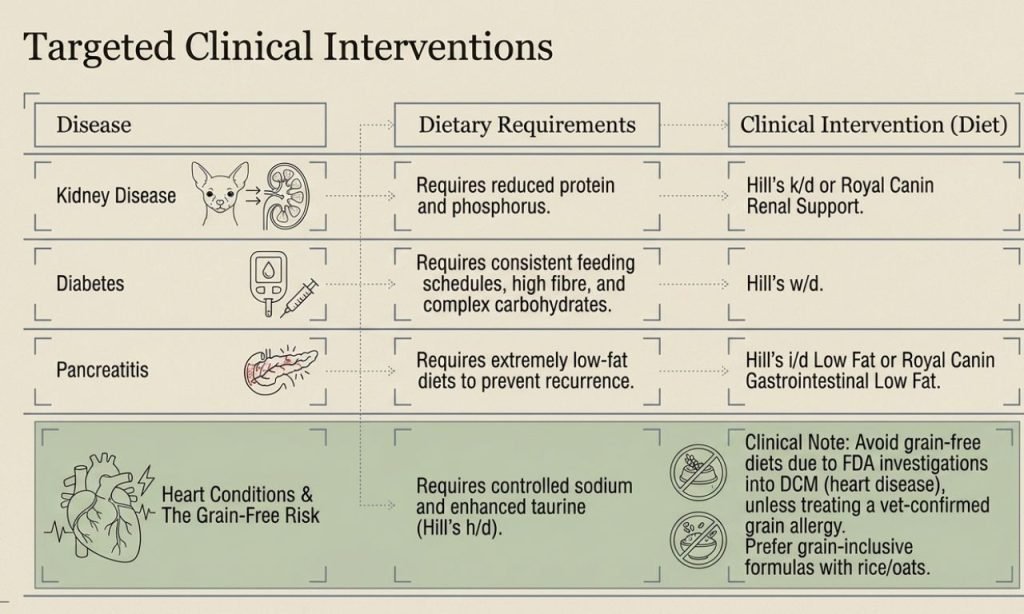
Some Chihuahuas develop health conditions requiring specialized nutrition.
Kidney Disease
Dogs with kidney disease need reduced protein and phosphorus. Hill’s Prescription Diet k/d and Royal Canin Renal Support are veterinarian-recommended options.
Diabetes
Diabetic dogs benefit from consistent feeding schedules and high fiber, complex carbohydrate formulas. Hill’s Prescription Diet w/d helps regulate blood sugar.
Heart Conditions
Dogs with heart disease need reduced sodium. Hill’s Prescription Diet h/d provides cardiac support through controlled sodium and enhanced taurine.
Pancreatitis
After pancreatitis episodes, dogs need extremely low fat diets. Hill’s Prescription Diet i/d Low Fat and Royal Canin Gastrointestinal Low Fat support recovery and prevent recurrence.
Dental Health and Food Selection
Dental disease affects most Chihuahuas by age three. Food texture plays an important role in oral health.
How Kibble Supports Dental Health
Dry kibble creates mild abrasion that helps remove plaque. Some dental formulas feature special kibble shapes designed to clean teeth as dogs chew.
When Dental Problems Require Food Changes
Dental pain made my dog picky. Skipping meals made stomach issues worse. Solutions included selecting very small kibble, soaking kibble in warm water to soften it, or mixing a small amount of wet food with dry to make eating more comfortable.
Dental Diets Worth Considering
Hill’s Prescription Diet t/d and Royal Canin Dental feature specially designed kibble that mechanically cleans teeth during chewing.
Preventing Hypoglycemia Through Proper Feeding
Chihuahua hypoglycemia is commonly happened for Low blood sugar which is dangerous, especially puppies and small adults under four pounds.
Hypoglycemia Prevention Strategies
Never skip meals. Feed puppies three to four times daily. Feed adult Chihuahuas at least twice daily. Keep honey or glucose gel approved by your veterinarian on hand for emergencies. If your dog shows signs of low blood sugar including weakness, shaking, disorientation, or lethargy, rub a small amount of honey on their gums and contact your veterinarian immediately.
Food Storage and Freshness
Proper storage maintains nutritional value and prevents spoilage.
Dry Food Storage Guidelines
Store dry food in its original bag inside an airtight container. Keep it in a cool, dry place away from direct sunlight. Use food within six weeks of opening. Check expiration dates before purchasing.
Wet Food Storage Guidelines
Refrigerate opened cans immediately. Use refrigerated wet food within three days. Discard any uneaten wet food left at room temperature for more than two hours.
Signs Food Has Gone Bad
Discard food that smells rancid or unusual, shows visible mold or discoloration, or feels excessively oily or sticky. When in doubt, throw it out.
Common Feeding Mistakes to Avoid
Even well-meaning owners make feeding errors that harm their Chihuahuas.
Table Scraps and Human Food
Table scraps lead to obesity, nutritional imbalances, and picky eating. They often contain ingredients that upset sensitive stomachs. Some human foods are toxic to dogs.
Free Feeding Problems
Leaving food available all day prevents you from monitoring intake. It makes house training harder. It allows food to become stale. Scheduled meals work better for most Chihuahuas.
The Just a Little Extra Trap
Adding just a little extra to each meal adds up quickly in tiny dogs. An extra tablespoon per day can cause significant weight gain over weeks.
Cost Analysis: Budget vs Premium Foods
Quality matters, but you do not need to spend a fortune to feed your Chihuahua well.
Cost Per Day Calculations
Chihuahuas eat so little that even premium foods cost less than one dollar per day. A five-pound bag of quality small breed food lasts one Chihuahua several weeks.
Budget-Friendly Quality Options
Nutro Natural Choice, Purina Pro Plan Small Breed, and Diamond Naturals Small Breed provide quality nutrition at moderate prices. These brands maintain good ingredient quality without premium pricing.
When Premium Is Worth It
Dogs with severe allergies, chronic digestive issues, or specific health conditions benefit from premium or prescription diets. The cost of proper food is far less than veterinary bills for preventable health problems.
Food Bowls: Selecting the Right Type
The right bowl makes eating more comfortable and can prevent certain health issues.
Elevated vs Floor Bowls
Most Chihuahuas do well with floor-level bowls. Elevated bowls may help dogs with neck or back problems, but they are not necessary for healthy Chihuahuas.
Material Choices
Stainless steel bowls resist bacteria and last forever. Ceramic bowls work well if they are heavy enough not to tip. Avoid plastic bowls, which harbor bacteria and may cause allergic reactions in some dogs.
Size Matters for Tiny Snouts
Choose shallow bowls designed for small breeds. Deep bowls make it difficult for Chihuahuas to reach food comfortably. Wide, shallow bowls prevent whisker stress and make eating easier.
Raw Food Diets: Important Considerations
Raw feeding has gained popularity, but it carries specific risks for small breeds.
Safety Concerns for Small Breeds
Raw meat can contain harmful bacteria including Salmonella and E. coli. Small dogs are more vulnerable to foodborne illness. Nutritional balance is difficult to achieve without professional guidance. Bone fragments pose choking hazards in tiny dogs.
When Raw Feeding Might Work
If you choose raw feeding, work with a veterinary nutritionist to ensure complete and balanced nutrition. Use commercially prepared raw diets formulated by pet nutrition experts rather than home-prepared meals. Follow strict food safety protocols.
Why I Do Not Recommend Raw for Most Chihuahuas
The risks outweigh potential benefits for most pet owners. High-quality commercial foods provide complete nutrition without safety concerns. The time, expense, and expertise required for proper raw feeding makes it impractical for most families.
Homemade Food: When and How to Use It
Homemade diets can help during digestive upset, but they require careful planning for long-term use.
Short-Term Relief for Upset Stomachs
For temporary digestive issues, I use boiled chicken or turkey with plain white rice and a small amount of plain pumpkin. This bland diet settles stomachs during flare-ups.
Why Long-Term Homemade Feeding Needs Professional Guidance
Creating nutritionally complete homemade meals requires specific ratios of protein, carbohydrates, fats, vitamins, and minerals. Nutrient deficiencies develop quickly in growing puppies. Even well-intentioned homemade diets often lack essential nutrients.
Working With a Veterinary Nutritionist
If you want to feed homemade meals long-term, consult a board-certified veterinary nutritionist. They will create recipes specifically balanced for your dog’s age, weight, and health status.
Food-Related Behavioral Issues
Some Chihuahuas develop problematic behaviors around food.
Resource Guarding
Resource guarding appears when dogs growl, snap, or bite when someone approaches their food bowl. Never punish this behavior. Instead, teach your dog that people approaching the bowl means good things by dropping high-value treats into the bowl as you walk by.
Food Aggression in Multi-Dog Homes
Feed dogs separately in different rooms or crates. This prevents competition, reduces stress, and ensures each dog eats their full portion.
Training Around Mealtimes
Use regular meals as training opportunities. Ask for a simple behavior like sit before placing the bowl down. This builds impulse control and reinforces your leadership without creating conflict.
Seasonal Adjustments to Feeding
Activity levels and calorie needs change with seasons.
Winter vs Summer Calorie Needs
Dogs may need slightly more calories in winter to maintain body temperature, especially if they spend time outdoors. In hot summer weather, activity often decreases and appetite may drop, requiring less food.
Activity Level Changes
Monitor your dog’s body condition monthly and adjust portions based on activity changes rather than making assumptions based on season alone.
Emergency Feeding Situations
Sometimes unexpected situations require temporary feeding solutions.
What to Do If You Run Out of Food
For one or two meals, boiled chicken with white rice provides safe temporary nutrition. Do not use this long-term. Purchase proper food as soon as possible.
Traveling With a Picky Eater
Bring your dog’s regular food when traveling. Pack extra in case of delays. Sudden food changes during travel cause digestive upset. If you must buy food on the road, choose the closest match to what your dog normally eats.
Boarding and Food Transitions
Provide boarding facilities with your dog’s regular food. Many facilities offer food, but your dog will do better with familiar meals. Label containers clearly with feeding instructions and portion sizes.
Frequently Asked Questions
How many times a day should I feed my Chihuahua?
Adult Chihuahuas do best with two to three small meals daily. Puppies need three to four meals. Senior dogs typically need two meals. Splitting daily portions into multiple feedings prevents low blood sugar and reduces vomiting.
Can Chihuahuas eat grain-free dog food?
They can, but grain-inclusive diets are generally recommended unless your dog has a confirmed grain allergy. Recent research suggests possible links between grain-free diets and heart problems in some dogs.
What human foods are safe for Chihuahuas?
Safe options include small pieces of cooked chicken, turkey, or lean beef without seasoning, plain cooked rice, small amounts of plain pumpkin, blueberries, small apple pieces without seeds, and baby carrots. Always introduce new foods gradually and in tiny amounts.
How do I know if my Chihuahua is allergic to their food?
Common signs include chronic itching, ear infections, digestive upset, excessive licking of paws, and skin rashes. Food allergies require veterinary diagnosis through elimination diet trials.
Should I feed my Chihuahua puppy food designed for the breed?
Breed-specific formulas from reputable brands like Royal Canin offer perfectly sized kibble and tailored nutrition. However, any high-quality small breed puppy food meeting AAFCO standards works well.
Is it better to feed wet or dry food?
Dry food supports dental health and costs less. Wet food provides more moisture and appeals to picky eaters. Many owners successfully combine both. Choose based on your dog’s individual needs and preferences.
Why does my Chihuahua vomit after eating?
Common causes include eating too fast, food that is too rich or fatty, eating too much at once, or food sensitivity. Try smaller portions, slower feeding methods, or switching to a sensitive stomach formula. Persistent vomiting requires veterinary evaluation.
How much water should my Chihuahua drink daily?
Approximately one ounce of water per pound of body weight. A five-pound Chihuahua needs about five ounces daily, though this varies with activity, temperature, and whether they eat wet or dry food.
Final Thoughts From a Chihuahua Owner
Feeding a Chihuahua well does not require following trends or buying the most expensive products. Success comes from understanding your individual dog’s needs and responding to what you observe.
Once I stopped chasing marketing claims and focused on ingredient quality, appropriate portion control, and choosing foods that supported gentle digestion, my Chihuahua became healthier, happier, and far less picky.
The best food is the one your dog thrives on consistently. Pay attention to energy levels, stool quality, coat condition, and overall wellbeing. These tell you more than any label or advertisement ever could.
Your Chihuahua depends on you to make informed decisions about their nutrition. With the information in this guide, you have everything you need to choose confidently and feed your dog well throughout their life.


I have to ponder at times why people to this day claim that these two foods are the best. Hills Science diet and Royal C. I’m sorry are we still brainwashed or bought out by these companies, because there are way better foods choices out there. Especially when they have to cook the food at such a high temperature that is left with barely any nutrition so they have to add fake vitamins and minerals. I just don’t understand why people still haven’t gotten it. You specifically talked about not adding a bunch of crap to their food, but that’s all I see in their food. It would be nice to see an unbiased article that didn’t include those brands in there. I mean, you can almost bet when you read one that those are going to be the first two out even though I not even sure, if there are any studies to back it up.
Hi. Thanks for your comment. We want to publish your opinion about best food. We want to publish it because different owner or breeder has different approach.