

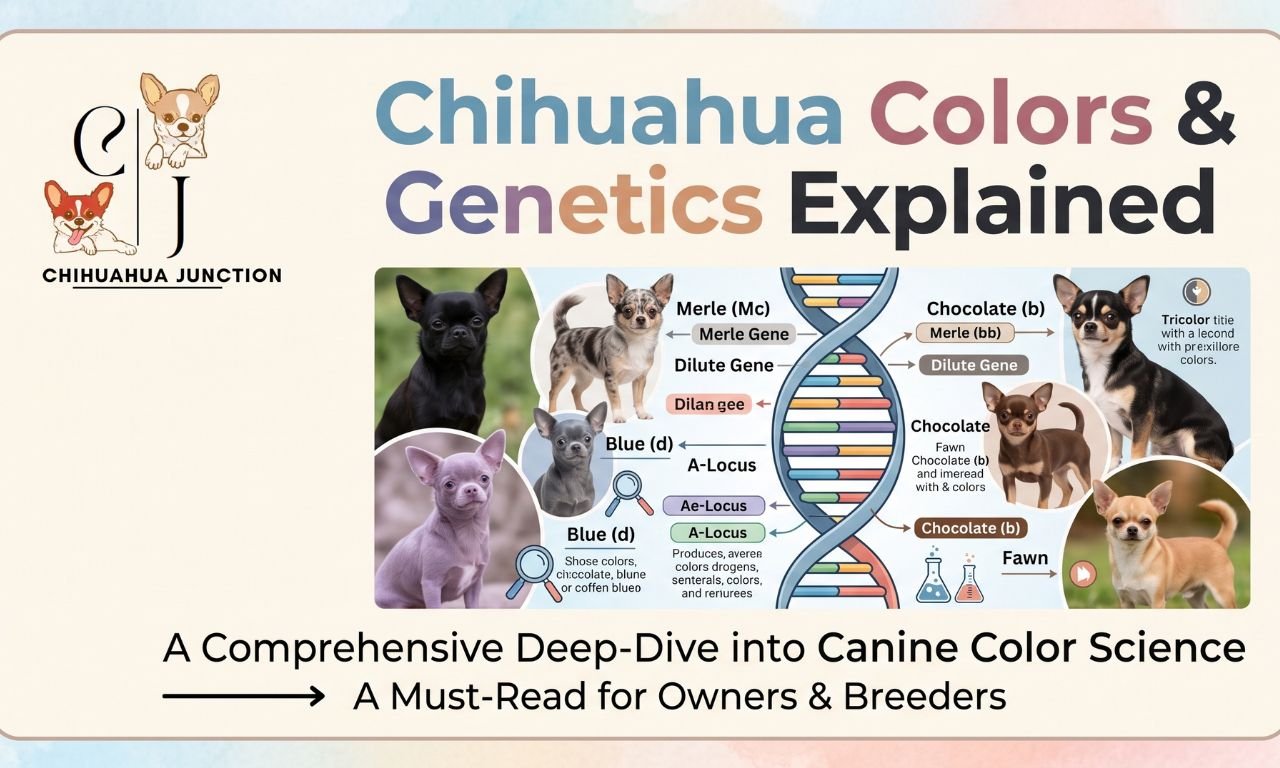

Chihuahuas come in one of the widest color ranges of any dog breed. Black, fawn, white, blue, brindle, merle, and many more combinations all show up within this single breed. The American Kennel Club accepts any color or pattern for Chihuahuas, so there is no such thing as an off standard shade.
This guide breaks down where these colors come from, which ones are common, which ones are rare, and what genetics has to do with all of it.
Quick answer: Chihuahua coat color comes down to two main pigment genes, one for black based colors and one for red based colors, along with several modifier genes that create dilution, patterns, and markings. Every color and pattern the breed produces comes from different combinations of these same genes.
Table of Contents
- How Coat Color Genetics Work
- Standard Colors
- Rare and Dilute Colors
- Patterns and Markings
- Merle: What to Know
- Color Comparison Table
- Does Color Affect Price or Health
- FAQ
How Coat Color Genetics Work
Every dog’s coat color starts with two base pigments, eumelanin and phaeomelanin. Eumelanin produces black, and phaeomelanin produces red or yellow tones. Every color a Chihuahua can have comes from some combination or modification of these two pigments.
A dog’s genes control several things layered on top of these base pigments. Some genes control dilution, which lightens a color to a softer shade. Other genes control where pigment shows up on the body, creating patterns like brindle or merle. A few genes control whether white spotting appears, creating patches of unpigmented fur.
Because Chihuahuas have such a deep and varied gene pool, nearly every possible combination of these genes shows up somewhere in the breed. This is why the color range is so wide compared to many other breeds.
Standard Colors
These are the colors most commonly seen in Chihuahuas and fully accepted under the AKC standard.
Black
A solid black coat comes from a strong presence of eumelanin with no dilution. Black can appear as a solid color or paired with tan markings on the face, chest, and legs, often called black and tan.
Fawn
Fawn is a warm, light tan shade that comes from phaeomelanin pigment without much modification. This is one of the most common colors in the breed and ranges from a pale cream tone to a deeper golden tan.
White
A white coat comes from genes that suppress pigment production across most or all of the body. Some white Chihuahuas carry small patches of another color, while others are fully solid white.
Chocolate and Cream
Chocolate comes from a gene that changes black pigment into a rich brown tone. Cream is a lighter, softer version of fawn. Both are common and fully accepted colors.
Rare and Dilute Colors
Dilute colors come from a specific gene that lightens the base pigment. These colors tend to be rarer and often carry extra health considerations.
Blue
Blue is a diluted version of black. Instead of a deep black tone, the coat appears as a soft silvery gray. Blue Chihuahuas are less common because the dilute gene is recessive, meaning both parent dogs need to carry it for puppies to be born blue.
Lilac
Lilac is a diluted version of chocolate, giving the coat a pale, dusty purple gray appearance. Like blue, lilac requires the dilute gene from both parents and is considered a rare color.
Isabella
Isabella is another name sometimes used for a very light, warm dilute shade, closely related to lilac. Naming can vary between breeders, so it helps to ask for a clear description of the exact shade.
Health Note on Dilute Colors
Dilute colored dogs, including blue and lilac Chihuahuas, have a higher chance of developing color dilution alopecia. This condition causes patchy hair thinning in the diluted color areas over time. It does not affect every dilute colored dog, but it shows up often enough that owners should watch for early signs like dry, flaky skin or thinning fur.
Patterns and Markings
Beyond solid colors, Chihuahuas can show several coat patterns.
Brindle
Brindle creates a striped, tiger like pattern of dark and light hairs mixed together. This pattern can appear over any base color and gives the coat a layered, textured look.
Sable
Sable coats have individual hairs that are lighter at the base and darker at the tip, creating a shaded, blended appearance rather than a solid block of color.
Piebald (White Spotting)
Piebald refers to patches of white mixed with another color. The amount and placement of white can vary widely, from small patches to coats that are mostly white with small colored spots.
Merle: What to Know
Merle is a pattern gene that creates mottled patches of diluted color over a base coat, along with random darker patches scattered throughout. It gives the coat a marbled appearance.
Merle is not part of the traditional Chihuahua gene pool and is believed to have entered the breed through crossbreeding with other merle carrying breeds at some point in history. Because of this, merle Chihuahuas are viewed with caution by many breed experts and are not accepted in some official standards.
The bigger concern with merle is breeding two merle dogs together. This pairing has a high chance of producing puppies with serious eye and ear defects, including blindness and deafness. Responsible breeders never pair two merle dogs together for this reason.
Color Comparison Table
| Color | Genetic Base | Rarity | Health Notes |
|---|---|---|---|
| Black | Eumelanin, no dilution | Common | No added concerns |
| Fawn | Phaeomelanin | Very common | No added concerns |
| White | Pigment suppression | Common | No added concerns |
| Chocolate | Modified eumelanin | Common | No added concerns |
| Cream | Light phaeomelanin | Common | No added concerns |
| Brindle | Pattern gene | Uncommon | No added concerns |
| Blue | Diluted black | Rare | Watch for coat thinning |
| Lilac | Diluted chocolate | Rare | Watch for coat thinning |
| Merle | Pattern gene, likely introduced through crossbreeding | Rare, often controversial | Higher risk of eye and ear defects, especially from merle to merle pairings |
Does Color Affect Price or Health
Rare colors like blue, lilac, and merle often carry a higher price tag simply because of demand. A rare color does not mean a healthier or higher quality dog. In some cases, as shown with dilute and merle colors, rare shades come with added health considerations rather than fewer.
Anyone choosing a Chihuahua based on color should still prioritize health testing, breeder reputation, and temperament first. A dog’s color is a wonderful detail, but it should never be the deciding factor over the dog’s overall health and background.
Frequently Asked Questions
What is the most common Chihuahua color? Fawn and black are among the most common colors seen in the breed, along with white and cream.
What is the rarest Chihuahua color? Lilac and merle are considered among the rarest, with merle also being the most controversial due to its link to health risks and crossbreeding history.
Are all Chihuahua colors accepted by the AKC? Yes. The AKC accepts any color or color combination for Chihuahuas, so there is no such thing as an unofficial color for the breed.
Why are blue and lilac Chihuahuas prone to hair loss? The same gene that creates the diluted color can also weaken the hair follicle over time, leading to a condition called color dilution alopecia in some dogs.
Is a merle Chihuahua purebred? This is debated. Many breed experts believe the merle pattern entered the Chihuahua gene pool through past crossbreeding with another merle carrying breed, which raises questions about how purebred a merle Chihuahua’s ancestry truly is.
Does coat color affect a Chihuahua’s personality? No. Coat color is a physical trait controlled by pigment genes. It has no connection to temperament, which depends on genetics related to behavior, training, and upbringing instead.
Conclusion
Chihuahua colors come from a small set of pigment genes working together in countless combinations, creating one of the most colorful ranges in the dog world. Common colors like black and fawn carry no extra health concerns, while rare colors like blue, lilac, and merle come with a few added considerations worth knowing. Understanding the genetics behind these colors helps every owner appreciate their dog’s unique look and make informed choices when selecting a new puppy.
