

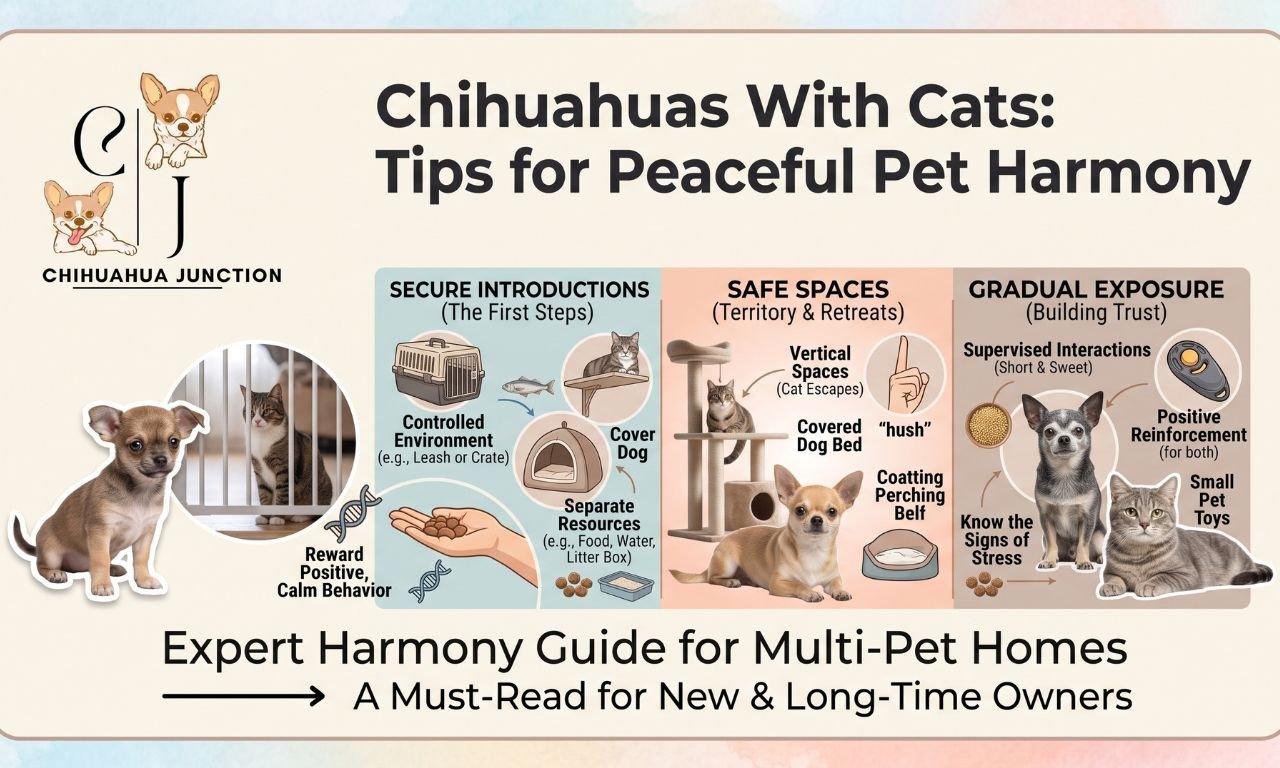

If you have a Chihuahua and are thinking about bringing a cat into your home, you might wonder if they can get along. You’re not alone—many pet owners worry about how these two very different animals will share the same space.
The good news is, with the right approach, your Chihuahua and cat can become great companions. You’ll discover simple tips to help your furry friends live together happily. Keep reading to find out how to create a peaceful, loving environment for both your Chihuahua and your cat.
Chihuahua Temperament
Chihuahuas have a unique temperament that makes them special pets. Their small size does not stop them from having big personalities. Understanding their behavior helps in creating a peaceful home with cats. Chihuahuas can be lively, alert, and very loyal. They enjoy being close to their owners and often seek attention.
Typical Behavior Traits
Chihuahuas are curious and energetic. They like to explore their surroundings carefully. These dogs can be quite vocal, barking at new sounds or strangers. Their alertness makes them good watchdogs. They may show some stubbornness but respond well to gentle training. Chihuahuas often enjoy cuddling and being warm. They can form strong bonds with family members quickly.
Social Tendencies
Chihuahuas can be friendly with pets and people. Socialization from an early age is important. Some may be shy or nervous around new animals. They often prefer one or two close companions. Chihuahuas enjoy playtime but may get tired fast. Respecting their small size helps prevent stress. They can live peacefully with cats if introduced carefully and calmly.
Cat Personality Traits
Cats have unique personality traits that affect their behavior around other animals. Understanding these traits helps create a peaceful home with both cats and Chihuahuas. Cats are curious, cautious, and often independent. They like to explore but also need safe places to retreat. Their mood can change quickly based on their surroundings and company.
Common Cat Behaviors
Cats enjoy playing and stalking small objects. They often pounce or chase toys to express their hunting instincts. Grooming is a daily habit that keeps their fur clean and healthy. Cats may also mark their territory by rubbing their face or scratching surfaces. They like quiet spaces and may hide when stressed. Many cats show affection by purring or rubbing against people and pets.
How Cats React To Dogs
Cats may feel nervous or scared around dogs at first. They watch dogs carefully and keep distance. Some cats hiss or puff up their fur to look bigger. Over time, cats can get used to calm dogs and even enjoy their company. Fast or noisy dogs might stress cats more. A slow, gentle dog helps cats feel safe. Patience is key for cats and dogs to build trust.
Introducing Pets Safely
Introducing a Chihuahua to a cat requires care and patience. Both pets have different ways of communicating. This can cause stress if not handled well. A safe introduction helps them live together peacefully. It also reduces fear and possible fights.
Preparation Before Introduction
Prepare a quiet space for the first meeting. Remove toys and food bowls to avoid possessiveness. Keep both pets on a leash or in carriers. Let them smell each other’s scent first. Swap blankets or bedding between them. This helps them get used to the new smell. Check each pet’s mood before starting. Calm and relaxed pets have better chances to get along.
First Meeting Tips
Keep the first meeting short and calm. Allow them to see each other but not touch. Watch their body language closely. Look for signs of stress or aggression. Praise calm behavior with soft voices. Slowly increase the time they spend together. Avoid forcing contact or chasing. Let them explore each other at their own pace. Repeat meetings often for better results.
Managing Early Interactions
Introducing a Chihuahua to a cat needs careful handling. Early interactions set the tone for their relationship. Taking time to manage these moments helps both pets feel safe and calm. This reduces stress and prevents fights. Patience is key during this phase.
Both animals have different ways to express themselves. Understanding these signals keeps the meeting peaceful. Gradual exposure builds trust and comfort. This stage requires close attention and control.
Supervised Play Sessions
Keep all first meetings short and under watch. Use a leash for the Chihuahua to control movements. Let the cat move freely but be ready to intervene. Offer toys to distract and engage both pets. Play sessions should end on a positive note. Repeat these sessions daily to build good habits.
Reading Body Language
Watch the Chihuahua’s tail and ears closely. A wagging tail means happiness, while a stiff tail shows tension. The cat’s body posture tells a lot. A relaxed cat blinks slowly and purrs. A scared cat hisses, arches its back, or flattens ears. Spotting signs early helps stop problems fast. Respect their signals and give breaks as needed.
Creating A Shared Space
Creating a shared space for Chihuahuas and cats helps them live happily together. Both pets need their own spots to feel safe and calm. Setting up clear areas can stop fights and stress.
Each pet has different needs. Dogs like Chihuahuas may be more active, while cats enjoy quiet places. A well-planned space keeps peace and comfort for all.
Separate Feeding Areas
Chihuahuas and cats should eat in different places. Dogs can be protective of their food. Cats might feel scared or rushed if close to the dog’s bowl.
Place food bowls far apart. This avoids competition and stress during mealtime. Keep water bowls separate too. Clean areas help keep pets healthy and happy.
Safe Zones For Each Pet
Both pets need a special safe zone. Cats like high spots or quiet corners. Chihuahuas enjoy cozy beds or crates where they can rest.
Safe zones give pets a break from each other. This space helps reduce anxiety and gives control over their environment. Make sure each pet’s zone is easy to reach and calm.
Training For Harmony
Training your Chihuahua and cat to live peacefully takes time and patience. Good training helps both pets understand boundaries and respect each other. It reduces stress and creates a calm home.
Start training early. Teach your Chihuahua clear commands to prevent unwanted behavior. Reward good actions to encourage harmony.
Basic Commands For Chihuahuas
Teach simple commands like “sit,” “stay,” and “come.” These help control your dog around the cat. Use short sessions to keep your Chihuahua focused. Praise and treats work well as rewards. Consistency is key for quick learning. Clear commands make your dog more predictable.
Encouraging Positive Behavior
Reward calm and gentle behavior near the cat. Ignore barking or chasing to reduce bad habits. Use treats to praise friendly interactions. Keep training sessions short and fun. Always stay calm and patient. Positive reinforcement builds trust and respect between pets.
Handling Common Challenges
Bringing Chihuahuas and cats together can be rewarding. It also brings challenges. Handling these common issues helps keep peace at home. Patience and clear steps work best.
Understanding and addressing problems early prevents bigger troubles. Focus on calm, gentle interactions between pets. Watch their behavior closely for signs of stress or discomfort.
Dealing With Jealousy
Chihuahuas may feel jealous when cats get attention. This can lead to whining or barking. Give each pet equal time and affection. Separate playtimes can help reduce competition.
Use treats to reward calm behavior near each other. Avoid forcing them to share space at first. Slowly increase their time together as they grow comfortable.
Managing Aggression
Aggression can appear as growling, snapping, or chasing. It often comes from fear or confusion. Create safe zones where each pet can retreat. Never punish aggression harshly; it makes fear worse.
Redirect aggressive behavior with toys or commands. Praise peaceful interactions to encourage good habits. Consistency and calm tones help both pets feel secure.
Maintaining Long-term Peace
Keeping peace between Chihuahuas and cats takes effort every day. Both pets need care and attention to live happily together. Understanding their needs helps avoid fights and stress.
Chihuahuas have a lot of energy. Cats enjoy quiet time but can play too. Balancing their moods and activities keeps the home calm.
Regular Exercise And Stimulation
Chihuahuas need daily exercise to use their energy well. Short walks and playtime help them stay calm. Toys and games keep their minds busy. Cats also need play to avoid boredom. Using toys that mimic hunting can please cats. When both pets play enough, they feel less restless. This lowers chances of conflict and bad behavior.
Consistent Routine
Pets feel safe with a regular schedule. Feeding, play, and rest at the same times help them relax. Chihuahuas and cats learn what to expect each day. This reduces anxiety and helps them trust their home. Keeping routines steady means fewer surprises. Calm pets are less likely to fight or hide.
Conclusion
Chihuahuas and cats can live well together. Patience and careful introduction help them get along. Watch their behavior and keep them safe. Each pet needs its own space and attention. Over time, they may become good friends. Enjoy the unique bond they can share.
Keep learning about their needs every day. Peaceful homes come from understanding and care.
