

The Chihuahua is one of the world’s smallest dog breeds, but its official breed standard is surprisingly detailed. Judges, responsible breeders, veterinarians, and dedicated owners use the breed standard to understand what defines a well-structured Chihuahua.
Although many pet Chihuahuas differ slightly from the ideal described in the standard, learning these guidelines helps owners recognize healthy structure, appreciate breed history, and understand why certain physical traits are valued.
This guide explains the official Chihuahua breed standard with a special focus on head shape, body size, facial features, proportions, and common misconceptions.
Sources: American Kennel Club (AKC) Breed Standard, Chihuahua Club of America (CCA), Fédération Cynologique Internationale (FCI).
Quick Answer: What Is the Official Chihuahua Breed Standard?
The official Chihuahua breed standard describes the ideal Chihuahua as a compact, graceful toy dog with:
- An apple-shaped head
- Large, round eyes
- Large upright ears
- A short, slightly pointed muzzle
- A compact body
- A confident expression
- A weight not exceeding 6 pounds (AKC standard)
The standard evaluates overall balance rather than a single physical feature.
Source: American Kennel Club Chihuahua Breed Standard.
What Is a Breed Standard?
A breed standard is an official description that defines the ideal appearance, movement, temperament, and structure of a purebred dog.
Organizations such as the American Kennel Club and the Chihuahua Club of America use these standards during conformation dog shows to evaluate how closely individual dogs match the ideal breed.
Breed standards are not intended to determine whether a Chihuahua is a good pet. Many healthy companions do not meet every show requirement.
Source: American Kennel Club Conformation Rules.
Chihuahua Breed Origins Help Explain the Standard
The Chihuahua originated in the Mexican State of Chihuahua, where small companion dogs became closely associated with the region during the nineteenth century.
Although several theories exist regarding the breed’s ancient ancestry, researchers have studied mitochondrial DNA to better understand the Chihuahua’s development and historical relationships with early companion dogs.
Some historians have suggested possible connections to ancient dogs that crossed the Bering Land Bridge with early Native American Indians, although the exact evolutionary history remains an active area of research.
Modern breed standards focus on preserving the Chihuahua’s established appearance rather than proving its earliest origins.
Sources: AKC History of the Chihuahua, published canine genetics research.
The Apple Head Defines the Chihuahua Standard
The most recognizable feature of the Chihuahua is its distinctive apple-shaped head.
Unlike many other toy breeds, the breed standard specifically calls for a well-rounded skull that resembles the shape of an apple.
Characteristics of an Apple Head
An ideal Apple Head Chihuahua has:
- Rounded skull
- Pronounced stop
- Short muzzle
- Broad forehead
- Large round eyes
- Strong but refined jaw
These features combine to create the alert expression that defines the breed.
The rounded skull is one of the most important characteristics evaluated in conformation competitions.
Source: American Kennel Club Breed Standard.
Does the Breed Standard Recognize Deer Head or Pear Head Chihuahuas?
This is one of the most common questions asked by Chihuahua owners.
The answer is no.
Deer Head Chihuahua
The term Deer Head Chihuahua describes dogs with:
- Longer muzzle
- Flatter forehead
- Narrower skull
- Less pronounced stop
Many healthy pet Chihuahuas have these characteristics, but they do not match the official AKC breed standard.
Pear Head Chihuahua
A Pear Head Chihuahua typically has:
- Slightly broader jaw
- Moderately rounded skull
- Intermediate facial proportions
Like the Deer Head or apple head, the Pear Head Chihuahua is an informal description rather than an officially recognized variety.
Both head types can make excellent companion animals despite differing from the show standard.
Sources: Chihuahua Club of America educational materials.
Chihuahua Head Measurements and Proportions
Rather than specifying exact head measurements, the breed standard emphasizes proportion and balance.
Judges evaluate how each feature complements the overall dog.
Skull
The skull should be:
- Well rounded
- Broad between the ears
- Balanced with body size
Stop
The stop should be:
- Deep
- Well defined
- Clearly separating the forehead from the muzzle
Muzzle
The muzzle should be:
- Moderately short
- Slightly pointed
- Neither extremely narrow nor excessively broad
Nose
Any nose color is acceptable if it complements the coat pigmentation.
Lips
Lips should fit neatly without excessive looseness.
Chihuahua Eyes According to the Breed Standard
The eyes contribute significantly to breed expression.
Ideal characteristics include:
- Large
- Round
- Full
- Luminous
- Well spaced
Eyes should never appear sunken.
Eye color generally corresponds with coat pigmentation.
Excessive eye prominence is undesirable because it may increase the risk of injury.
Source: AKC Chihuahua Breed Standard.
Ear Shape and Placement
The Chihuahua’s ears are among its defining characteristics.
An ideal Chihuahua has:
- Large ears
- Upright carriage
- Wide placement
- Slight outward angle when relaxed
Puppies often develop erect ears naturally as they mature.
Ear size should remain proportional to the head without appearing oversized.
Body Size According to the Breed Standard
Despite their small stature, Chihuahuas should never appear fragile.
The ideal dog has:
- Compact body
- Well-developed muscles
- Level topline
- Balanced proportions
Official Weight
The AKC specifies:
- Maximum show weight of 6 pounds
There is no official minimum weight.
Very small “teacup” Chihuahuas are not recognized as a separate variety.
Source: American Kennel Club Breed Standard.
Coat Varieties Recognized by the Breed Standard
The Chihuahua standard recognizes two official coat varieties.
Short Hair Chihuahua
The Short Hair Chihuahua has:
- Smooth coat
- Soft texture
- Close-fitting hair
- Slightly thicker coat around the neck
Long Hair Chihuahua
The Long Hair Chihuahua has:
- Soft fine coat
- Feathering on ears
- Plumed tail
- Longer hair around the neck and legs
Both varieties are judged according to the same structural standard.
The coat changes appearance but not head shape.
Source: AKC Breed Standard.
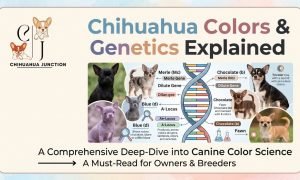
Are Merle Chihuahuas Part of the Breed Standard?
A Merle Chihuahua may be registered in some registries depending on ancestry, but the merle pattern is controversial because responsible breeding programs prioritize reducing inherited health risks associated with certain merle pairings.
Merle affects coat color rather than skull shape, body proportions, or overall structure.
Prospective owners should choose breeders who perform appropriate genetic testing.
Sources: Chihuahua Club of America, veterinary genetics publications.
Summary of Chihuahua Head Features
An ideal Chihuahua head includes:
- Apple-shaped skull
- Pronounced stop
- Short muzzle
- Large upright ears
- Round expressive eyes
- Balanced proportions
- Alert expression
These features combine to create the distinctive appearance that has made the Chihuahua one of the world’s most recognizable toy breeds.
Chihuahua Bite, Teeth, and Jaw Standard
The Chihuahua breed standard evaluates more than the shape of the head. Judges also examine the bite, jaw alignment, and overall mouth structure because these features affect both appearance and function.
What Bite Does the Breed Standard Require?
According to the American Kennel Club, the ideal Chihuahua has either:
- A level bite
- A scissors bite
Both bite types are considered acceptable when the teeth are properly aligned.
An overshot or undershot bite is considered a structural fault because it changes the Chihuahua’s facial proportions and may affect normal chewing.
Source: American Kennel Club Chihuahua Breed Standard.
Dental Structure and Oral Health
Chihuahuas have small mouths, which means tooth spacing is naturally limited.
Even dogs that perfectly match the breed standard may be more likely to develop:
- Dental issues
- Periodontal disease
- Plaque buildup
- Tartar accumulation
Regular tooth brushing, professional cleanings, and routine veterinary examinations help reduce these risks.
Owners should also monitor normal tooth growth during puppyhood because retained baby teeth are relatively common in toy breeds.
Sources: American Veterinary Dental College, American Kennel Club.
Neck, Chest, and Body Structure
The Chihuahua should appear balanced rather than delicate.
Neck
The ideal neck is:
- Slightly arched
- Medium in length
- Clean without loose skin
Long Coat Chihuahuas often appear to have thicker necks because of the surrounding feathering.
Chest
The chest should be:
- Deep enough to reach the elbows
- Well sprung at the ribs
- Neither barrel-shaped nor narrow
This structure allows efficient movement while maintaining the compact proportions expected in the breed.
Back
According to the breed standard, the back should have:
- Level topline
- Short body
- Firm structure
A level back contributes to efficient movement and balanced posture.
Source: American Kennel Club Breed Standard.
Legs and Feet
Although Chihuahuas are tiny dogs, their legs should appear straight and well balanced.
Front Legs
Ideal front legs have:
- Straight alignment
- Moderate bone
- Well-developed muscles
Rear Legs
The hindquarters should provide:
- Good angulation
- Strong muscles
- Efficient propulsion
Feet
The breed standard describes the feet as:
- Small
- Compact
- Well cushioned
Proper foot structure supports healthy movement throughout the dog’s life.
Tail Standard
The Chihuahua’s tail is another important breed characteristic.
An ideal tail should be:
- Moderately long
- Set high
- Carried in a sickle or curved shape
- Never tucked between the legs
Long Hair Chihuahuas develop a distinctive feathered plume, while Short Hair Chihuahuas have smooth tails with less visible coat.
Source: American Kennel Club Breed Standard.
How Should a Chihuahua Move?
Movement is one of the most important parts of conformation judging.
An ideal Chihuahua moves with:
- Confidence
- Good reach in front
- Strong drive from the rear
- Level topline while walking
The gait should appear smooth, balanced, and effortless.
Dogs with structural faults often show restricted movement or uneven stride length.
Source: American Kennel Club Conformation Guidelines.
Temperament According to the Breed Standard
The Chihuahua is known for much more than its appearance.
The breed standard describes the Chihuahua as:
- Alert
- Confident
- Self-assured
- Terriersque in temperament
One defining characteristic is its strong loyalty toward its family.
Well-socialized Chihuahuas are affectionate companions that enjoy close interaction with trusted people.
Although they are small, many owners appreciate their natural instinct to alert the household to unfamiliar sounds, making them surprisingly effective watchdogs.
Source: Chihuahua Club of America.
Coat Colors and Markings
The breed standard accepts virtually every coat color and marking.
Examples include:
- Fawn
- Black
- White
- Chocolate
- Cream
- Blue
- Red
Patterns may include:
- Solid
- Spotted
- Sable
- Brindle
Because coat color does not influence structure, judges focus primarily on overall balance and correct physical characteristics.
Common Structural Faults
A Chihuahua can be healthy while still having structural faults under the breed standard.
Common examples include:
- Flat skull
- Long muzzle
- Low ear placement
- Weak topline
- Overshot bite
- Undershot bite
- Poor movement
- Excessively long body
These characteristics affect show evaluations but do not necessarily reduce a Chihuahua’s quality as a companion.
Source: American Kennel Club Breed Standard.
Does Every Pet Chihuahua Meet the Breed Standard?
No.
Many beloved family pets differ from the ideal standard in one or more ways.
For example, a Chihuahua may have:
- Deer Head characteristics
- Pear Head features
- Larger body size
- Smaller ears
- Longer muzzle
- Different proportions
These differences are completely normal and do not determine how loving, intelligent, or healthy a dog will become.
The breed standard exists primarily for preserving consistent breed type in responsible breeding programs and conformation competitions.
Choosing a Healthy Chihuahua
If you are adding a Chihuahua to your family, appearance should never be the only consideration.
Whether you choose adoption or purchase from a breeder, prioritize:
- Health testing
- Stable temperament
- Good socialization
- Veterinary care
- Ethical breeding practices
Many wonderful Chihuahuas are available through:
- Animal shelters
- Chihuahua-specific rescue organizations
- Breed-specific rescues
Adoption gives deserving dogs a second chance while helping reduce the number of homeless pets.
If purchasing from a breeder, ask about health screening for inherited conditions and avoid anyone promising “perfect” puppies or guaranteeing specific physical traits.
Sources: American Kennel Club, Humane Society of the United States.
Frequently Asked Questions
Is an Apple Head Chihuahua required by the breed standard?
Yes.
The American Kennel Club breed standard specifically calls for a well-rounded apple-shaped head.
Are Deer Head Chihuahuas purebred?
Yes.
A Deer Head Chihuahua can be fully purebred even though the head shape does not match the official conformation standard.
Does the breed standard recognize teacup Chihuahuas?
No.
There is no official “teacup” Chihuahua variety in the American Kennel Club breed standard.
Does coat type affect the breed standard?
No.
Short Hair and Long Hair Chihuahuas are judged using the same structural standard.
The only difference is coat length and feathering.
Can head shape predict health?
Not entirely.
While extremely short muzzles or very small jaws may contribute to certain dental or breathing concerns, overall health depends on genetics, responsible breeding, nutrition, preventive veterinary care, and lifestyle.
Is a Merle Chihuahua part of the breed standard?
Merle refers to coat color rather than body structure.
Responsible breeders should perform appropriate genetic testing because certain merle-to-merle breedings increase the risk of inherited health problems.
Key Takeaways
The Chihuahua breed standard is designed to preserve the unique appearance and structure of one of the world’s most recognizable toy breeds.
The ideal Chihuahua combines:
- An apple-shaped head
- Large expressive eyes
- Upright ears
- A compact body
- Balanced movement
- Confident temperament
Many companion Chihuahuas differ from this ideal while remaining healthy, affectionate, and wonderful family dogs.
Understanding the breed standard allows owners to appreciate why these characteristics developed while remembering that responsible ownership, preventive healthcare, regular dental care, and positive training have a much greater impact on a Chihuahua’s quality of life than success in the show ring.