

Finding the right way to keep your dog safe starts with a Fi GPS Dog Collar Review. You have to decide between cellular tracking, satellite tech, or simple radio signals. These tools differ most on how they handle distance and whether they need a monthly subscription. Small differences in battery life or GPS range can change your daily routine. Every pick below is judged on what it’s strong at, what it gives up, and what living with it would ask of you.
1. Fi Series 3+ Tracker

Best for: Owners needing nationwide coverage and daily health monitoring.
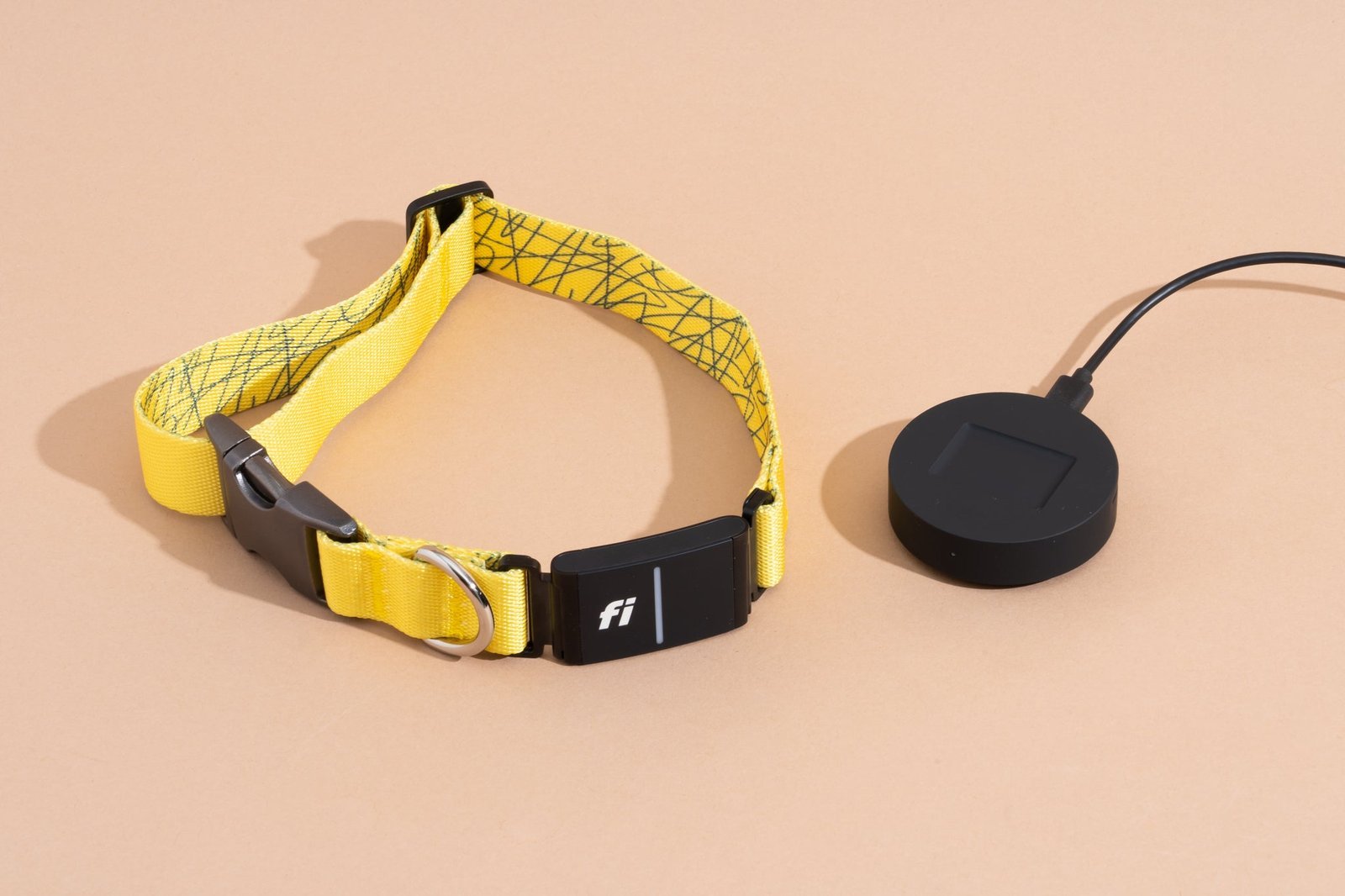
The Fi Series 3+ Tracker is a full-collar system that uses cellular and GPS networks to provide real-time location data. Its listing highlights 2x improved GPS performance compared to older versions and includes a built-in LED light for night visibility. The device also integrates AI health tracking to monitor sleep, steps, and behaviors like scratching or drinking.
Strengths:
- Nationwide cellular and GPS coverage
- IP68 waterproof rating for durability
- Built-in LED for night visibility
- Tracks sleep and activity levels
- Includes one month of membership
Trade-offs:
- Requires a subscription after first month
- Dependent on cellular signal availability
Living with this tracker means you’ll check the app to see your dog’s activity trends and safe zone status. You must keep the wireless charging base ready for regular power-ups to maintain the GPS connection.
| Best for | Why |
|---|---|
| City dwellers | Reliable cellular coverage in urban areas |
| Health-focused owners | Tracks activity and long-term health trends |
| Families | Multi-user app sharing for alerts |
2. Fi Mini GPS Tracker

Best for: Small dog or cat owners who want a lightweight attachment.
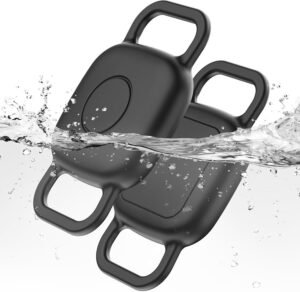
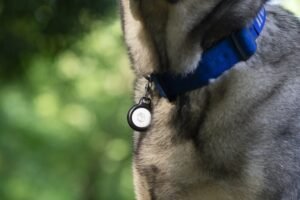
The Fi Mini GPS Tracker is a compact clip-on device that attaches to an existing collar. It provides the same nationwide live tracking and virtual fence alerts as the larger models. The listing emphasizes that it’s designed to stay small and light while maintaining a waterproof build for everyday use.
Strengths:
- Compact, lightweight clip-on design
- Nationwide coverage with no range limit
- Real-time tracking in Fi app
- Waterproof for rain and mud
- Includes one month of membership
Trade-offs:
- Subscription needed to maintain service
- Must be attached to a collar
This unit is designed for owners who want to avoid bulky collars but still require GPS security. You’ll need to ensure the clip remains secure on your pet’s current collar during active play. Once paired, you can stop searching for your pet manually and rely on the app to provide their location if they leave a safe zone.
| Best for | Why |
|---|---|
| Small pets | Lightweight design won’t weigh them down |
| Minimalists | Clips onto collars you already own |
| Quick setups | Easy unbox and pair process |
3. Ultra Satellite Dog Tracker

Best for: Adventurers exploring remote areas without cell service.
The Ultra Satellite Dog Tracker uses T-Satellite with Starlink to maintain a connection in deep woods or mountain backcountry. It features a humane callback system using sound and vibration signals to help with training. The listing notes it’s built for durability with IP68/66K-rated water resistance and a secure latch.
Strengths:
- Satellite connectivity for remote areas
- Sound and vibration training recall
- IP68/66K-rated waterproof design
- Secure latch for active dogs
- USB-C charging for convenience
Trade-offs:
- Best suited for larger dogs
- Requires membership for service
You’ll use this tracker when you’re far from traditional cell towers and need to keep tabs on your dog. You must practice the vibration recall training to build a routine that works without static shock.
| Best for | Why |
|---|---|
| Hikers | Satellite tracking works in deep woods |
| Training enthusiasts | Vibration recall helps off-leash control |
| Rugged users | Handles swimming and rough terrain |
4. Dog GPS Tracker No-Subscription
Best for: Owners wanting simple, off-grid tracking without monthly fees.
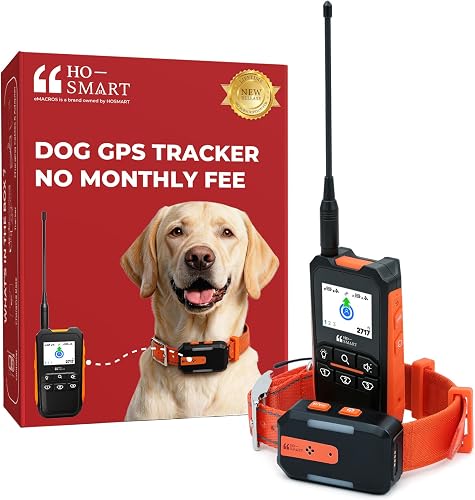
The Dog GPS Tracker No-Subscription by eMACROS uses radio frequency to track your dog without any internet or cellular connection. It provides a handheld controller that shows direction and distance with a simple arrow. The listing states it’s designed for dogs 35+ lbs and offers an IP67 waterproof rating for outdoor activities.
Strengths:
- No monthly subscription fees ever
- Works without cellular or internet
- Simple handheld arrow guidance
- Up to 3-mile tracking range
- 5-day battery life for tracker
Trade-offs:
- Range limited by terrain density
- Handheld unit requires charging
Operating this system is straightforward, as you follow the arrow on the handheld screen to find your pet. the listing doesn’t mention the handheld controller’s charging frequency
| Best for | Why |
|---|---|
| Budget-conscious owners | No recurring monthly subscription cost |
| Off-grid explorers | Works without cellular towers |
| Tech-averse users | Simple interface, no complex maps |
5. Nova GPS Fence Collar

Best for: Owners needing a reliable, app-managed virtual boundary.
The Nova GPS Fence Collar by SpotOn is designed to keep dogs within customizable virtual boundaries. It uses dual-band, dual-feed GPS technology for location precision, even in wooded areas. The listing highlights that it allows you to create unlimited fence shapes and manage everything through the app.
Strengths:
- Highly precise dual-band GPS
- Unlimited custom virtual fences
- App-controlled boundary management
- Certified 1:1 training support
- Reliable in dense tree cover
Trade-offs:
- Requires consistent boundary setup
- Fits specific neck size range
You’ll spend time mapping out your property to create the perfect virtual fence for your yard. You must monitor the app to check containment activity and ensure your dog is staying within the designated zones.
| Best for | Why |
|---|---|
| Property owners | Create fences of any shape |
| Forested areas | Dual-band GPS handles tree cover |
| Training support | Access to certified 1:1 guidance |
Side by Side
The table below helps you quickly compare the primary features and tracking technologies of these GPS dog collars.
| # | Product | Best for | Price |
|---|---|---|---|
| 1 | Fi Series 3+ Tracker | Best Overall | Check price on Amazon |
| 2 | Fi Mini GPS Tracker | Best Compact Attachment | Check price on Amazon |
| 3 | Ultra Satellite Dog Tracker | Best Satellite Connectivity | Check price on Amazon |
| 4 | Dog GPS Tracker No-Subscription | Best Off-Grid Tracking | Check price on Amazon |
| 5 | Nova GPS Fence Collar | Best Boundary System | Check price on Amazon |
How to Judge One of These
Tracking Technology
The type of connection changes how far you can go. Cellular trackers offer nationwide range but need a subscription and signal. Satellite trackers work in the wild but are often larger. Radio frequency trackers require no fees but have a physical range limit.
Battery Life and Charging
Battery performance determines how often you need to touch the device. Some units last for days, while others require daily charging. If you’re away for long weekends, look for the longest standby time listed.
Boundary and Alert Systems
Virtual fences and escape alerts are the core safety features for many owners. These systems send notifications to your phone if your dog leaves a set area. Some offer simple alerts, while others include training tools like sound or vibration. You can verify the size of your yard or the area you need to protect to ensure the system supports the specific shapes and distances you require.
Closing
For most owners, the Fi Series 3+ Tracker offers the best balance of health monitoring and reliable nationwide tracking. If you frequently explore remote backcountry, the Ultra Satellite Dog Tracker is the better choice for its off-grid connectivity. Check your local cellular coverage or terrain needs before you order your preferred model.
Related guides
Frequently Asked Questions
Will these trackers work if I live in a rural area?
Cellular trackers like those from Fi depend on local network coverage. If your area has no cell signal, you should choose the Dog GPS Tracker No-Subscription, which uses radio frequency. Always check your phone’s signal status at home to see if cellular options will be reliable for your specific location.
How hard is the first week with a new GPS collar?
The first week involves charging the device and setting up your virtual safe zones in the app. You’ll need to spend time teaching your dog the boundaries if the collar includes training cues. Some owners find the setup intuitive once they pair the device to their smartphone.
Do I need to buy anything extra for these?
Most subscription-based collars include the first month, but you must renew the plan to keep the GPS service active. Some units like the clip-on versions require you to have your own collar ready. Check the box contents to ensure you have the correct charging cables and accessories for your specific model.
Can these collars stop my dog from running away?
These trackers provide alerts when your dog leaves a virtual fence, but they’re tools for monitoring rather than physical barriers. Some models offer sound or vibration recall to help you call your dog back. They’re most effective when used alongside consistent obedience training to ensure your dog responds to your commands.
Is the simplest tracker enough for my needs?
If you only need to know where your dog is in a park or local neighborhood, a basic tracker with real-time GPS is usually enough. If you need health data or remote-area safety, you’ll want the more advanced models. Match the feature set to your daily lifestyle rather than buying more tech than you actually use.
Final Thoughts
Choosing the right tracker isn’t just about tech specs; it’s about finding peace of mind during your daily walks. Think about your dog’s habits and where you usually roam before you commit to a plan. You’ll find that once you’ve got the right device, you won’t have to worry about them anymore.